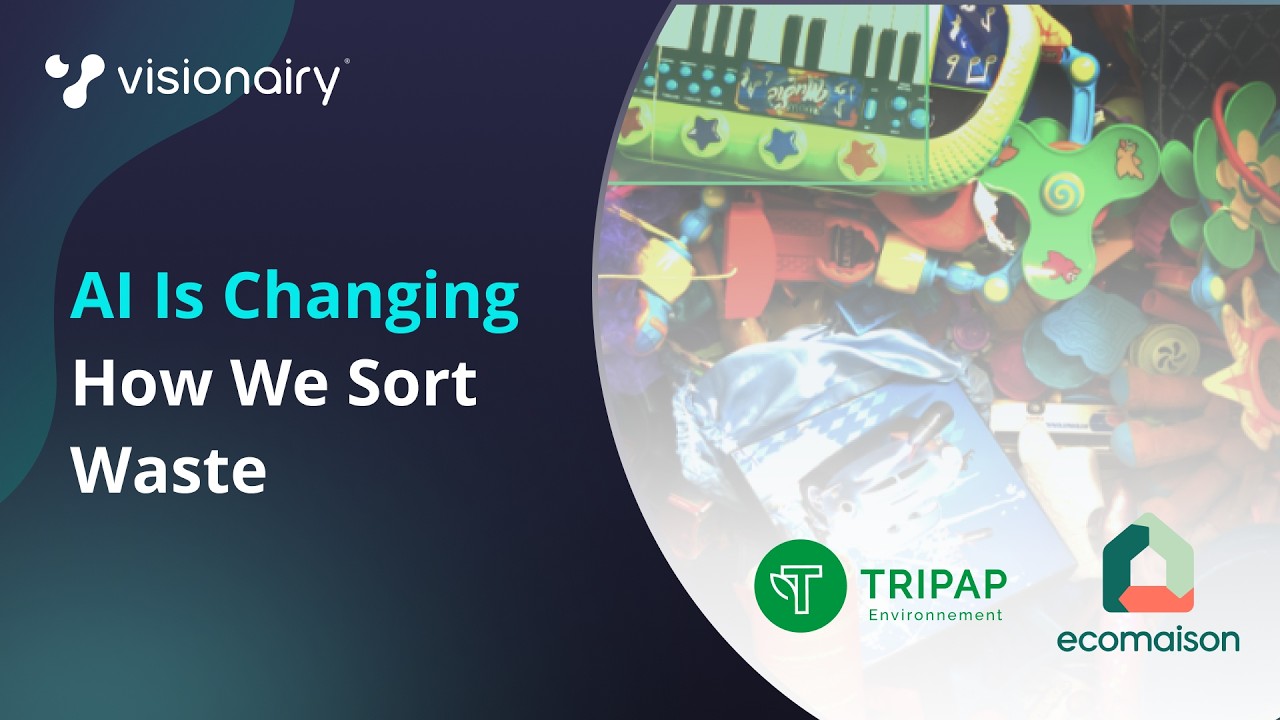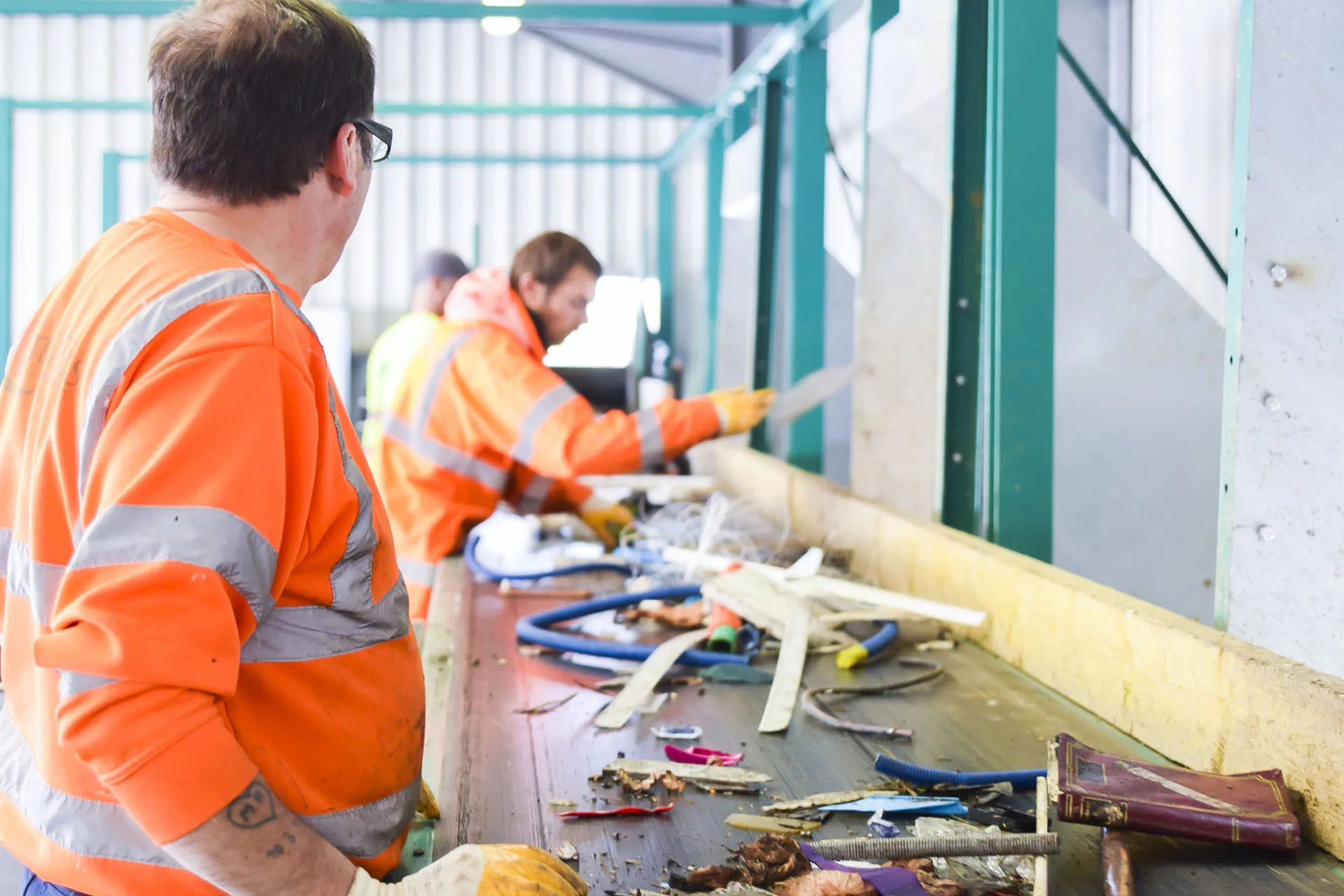
- The context: Ecomaison is approved for the collection, sorting, reuse and recycling of non-electric, non-electronic toys from French households, through a network of sorting and materials processing centres. Within these streams, sorting errors persist and end-of-life electric and electronic toys (WEEE) can end up in the plastics shredding stream, where they can cause fires.
- Why: When battery cells are damaged by impact or shredding, a chemical chain reaction generates extreme heat (700–800°C), causing all cells to ignite and releasing flammable gases. The result is a fire that is often highly destructive.
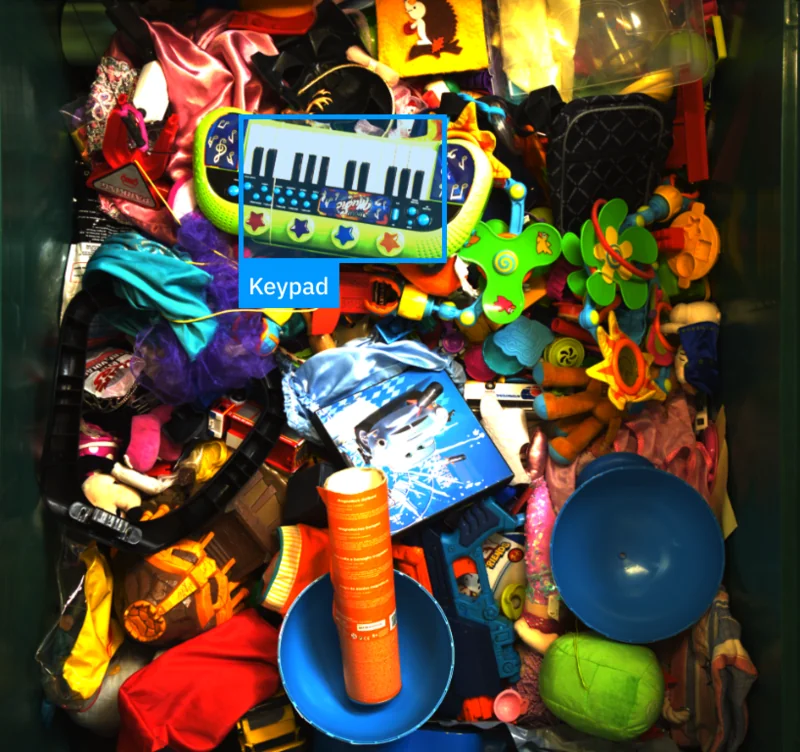
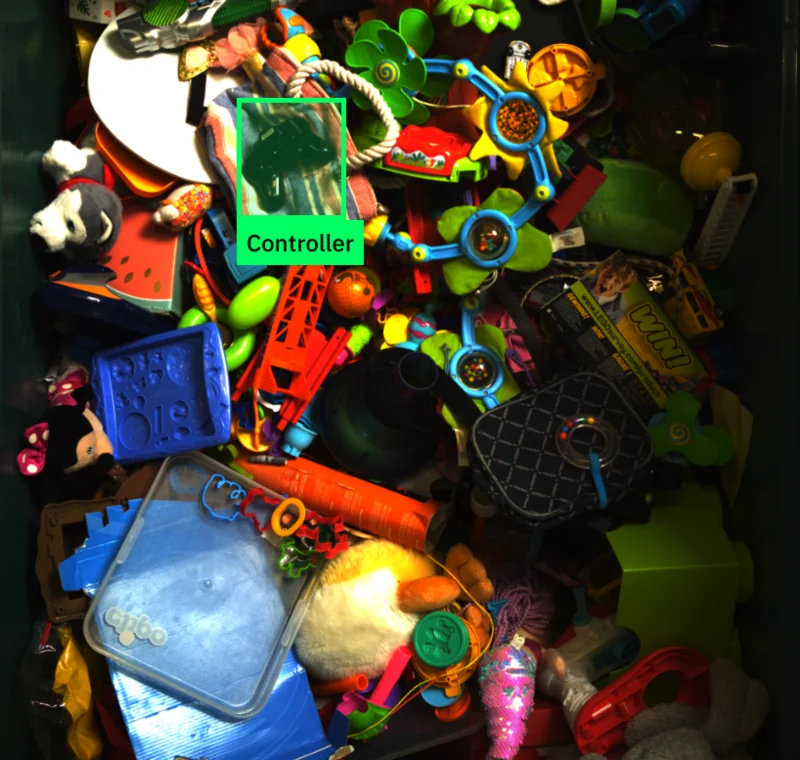
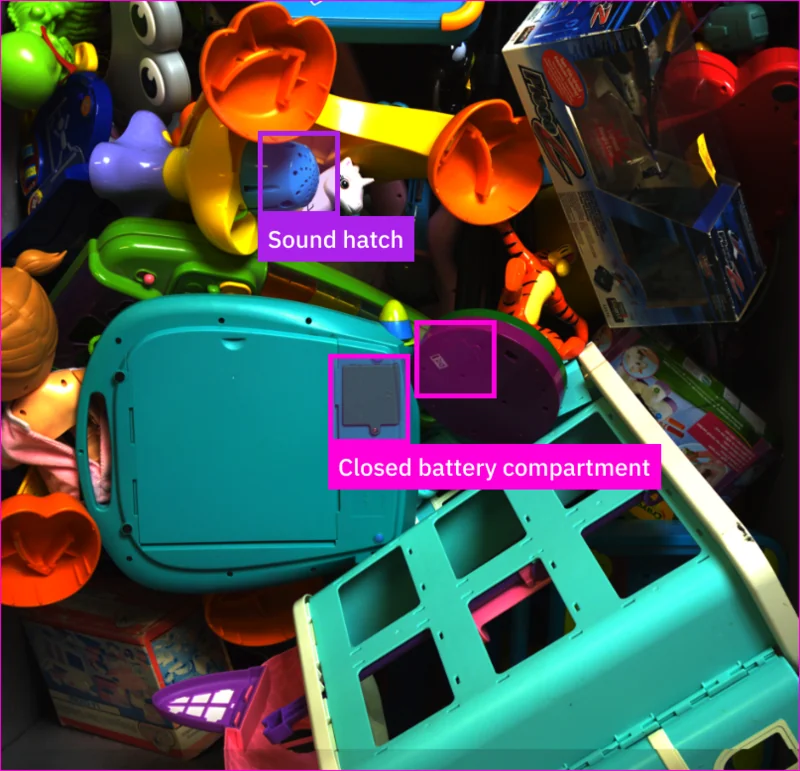
- The Visionairy solution: AI-based vision that identifies the visible features of WEEE (battery compartment, sound hatch, electronic keypad, remote-controlled car, and so on) directly on the line, and alerts the operator or stops the conveyor.
- The deployment: Initiated and funded by Ecomaison. After a validation phase on fixed bins at Rejoué and Paprec, the solution is now installed on a conveyor line at Tripapyrus.
- The positioning: an affordable quality barrier (under €30,000), placed after operator sorting, which does not claim to catch everything but clearly reduces the risk of incident.
The threat: lithium batteries pose serious risks to sorting and recycling operators and facilities
In a toy sorting centre, thousands of items go by every day. Among them hide electronic toys whose batteries, crushed or punctured at the end of the line, can start a fire.
The stakes are concrete and growing. In France, the national industrial-risk bureau (BARPI) recorded around 40 fires linked to lithium batteries in 2023, nearly double the previous year, and the recycling federation FEDEREC attributes more than 60% of fires in the waste sector to these batteries. A single undetected cell, crushed or punctured, can shut down a line, damage equipment, and put teams at risk.
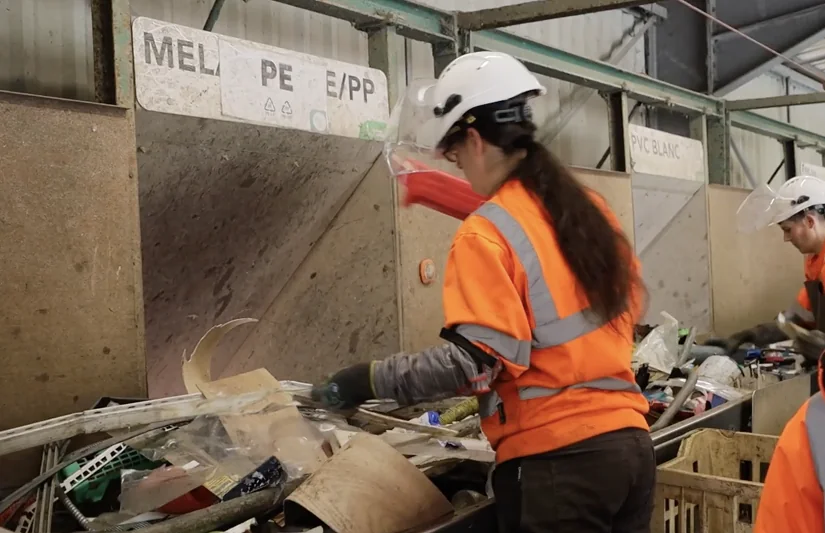
Manual sorting remains the first line of defence, but it has its limits: the pace is high, toys arrive loose and jumbled, and a battery compartment can go unnoticed under a pile of other objects. Ecomaison's operational model routes these material flows through sorting and processing operators like Tripapyrus, under contract with the producer responsibility organisation. Ecomaison's goal is to help contracted operators secure the material sorting steps so that lithium batteries, which should not be in these streams, are identified and extracted.
How the project started: validate first, deploy later
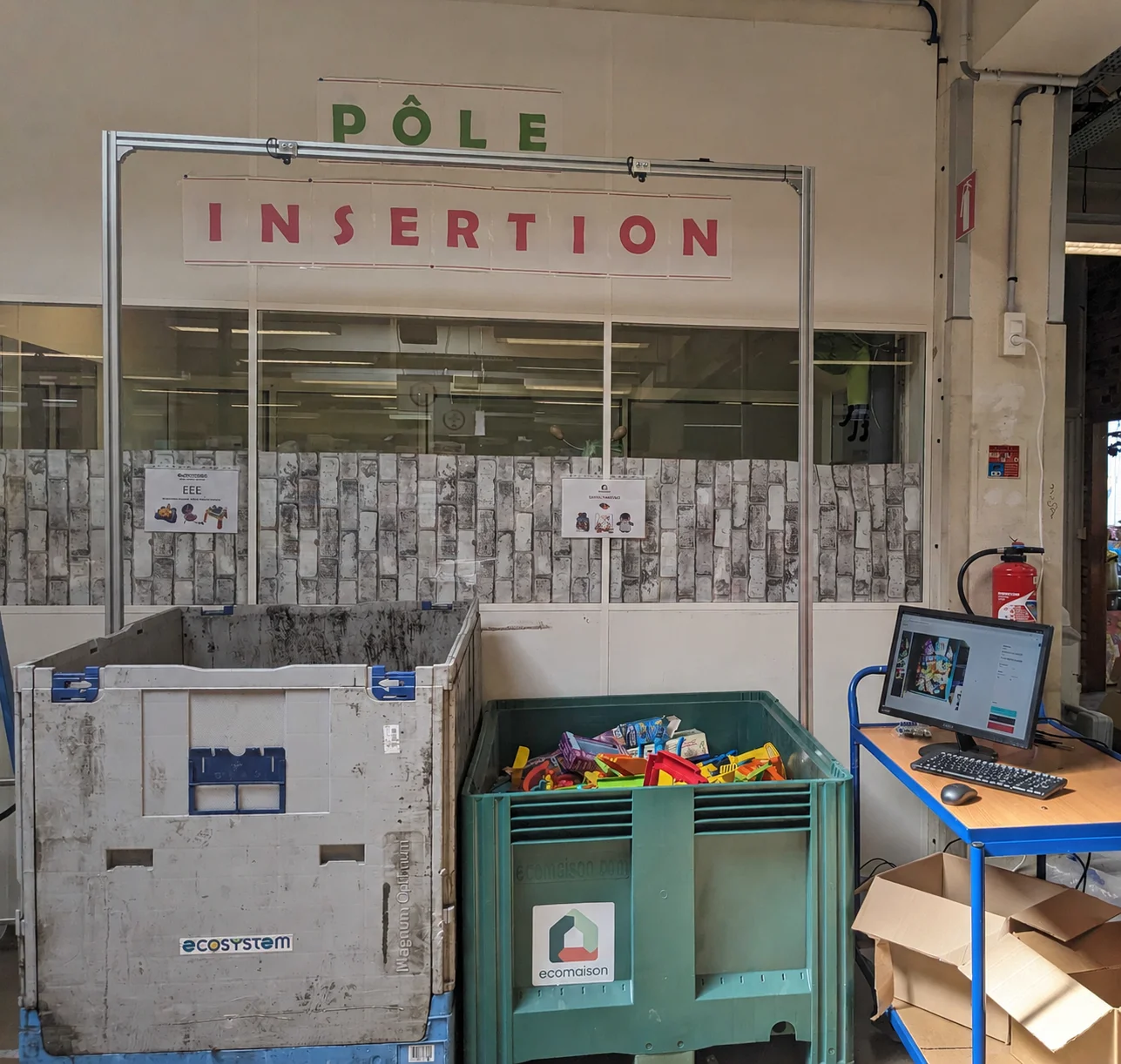
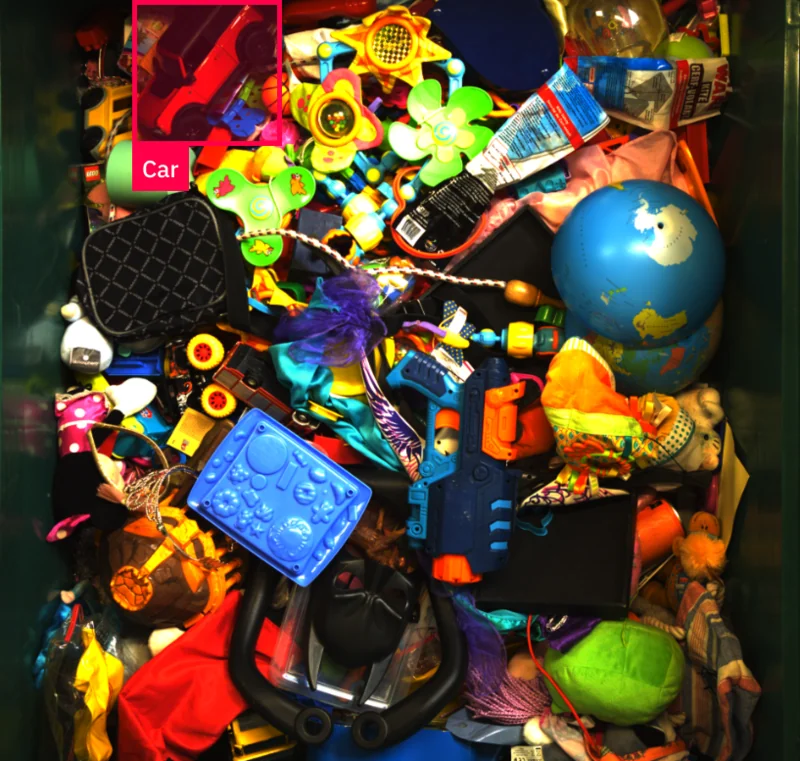
Before installing anything on a production line, Visionairy ran a validation phase with Ecomaison, on real crates from its sorting partners Rejoué and Paprec. Two vision arches were installed above toy bins to photograph real crates: a set of 32 crates deemed compliant, with no WEEE, and 40 crates containing WEEE, each labelled by hand with bounding boxes.
This made it possible to build a training dataset from real toys and to test the model's ability to recognise the features specific to WEEE in a difficult environment: loose, mixed, poorly lit toys in every possible position. Because labelling this kind of data is time-consuming, the test set was deliberately kept small, enough to gauge the industrial potential and pinpoint where to focus next.
Deployment at Tripapyrus: from fixed bin to conveyor
The step taken this year is decisive: moving from a still bin photographed at regular intervals to a continuously moving conveyor line. This is what brings the solution closer to a real industrial use case.
At Tripapyrus, the system watches the toys as they pass by, analyses each one, and flags detected WEEE. Visionairy also evaluated a larger vision-language model that reaches higher precision, but it is far too slow to keep up with a moving line. Our AI model was therefore chosen for real-time operation on the conveyor, the best trade-off for this context.
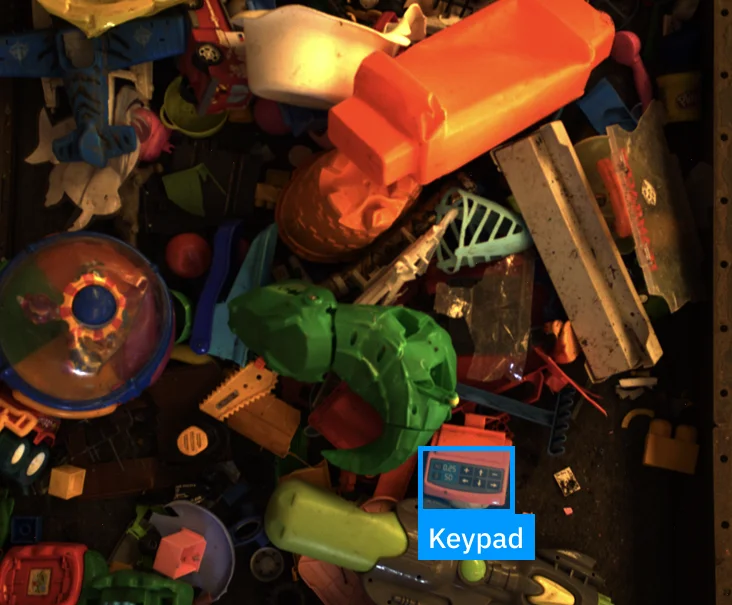
How it works: recognising WEEE from its visible signs
The principle is worth understanding. The system does detect WEEE, but since these items are most often hidden inside toys, it relies on the visible clues that reveal them. In practice, here are examples of the kinds of features the AI can recognise:
- a battery compartment, open or closed
- a sound hatch
- an electronic keypad or buttons
- a remote control or a remote-controlled car circuit
- a cable, a switch, an electric tool
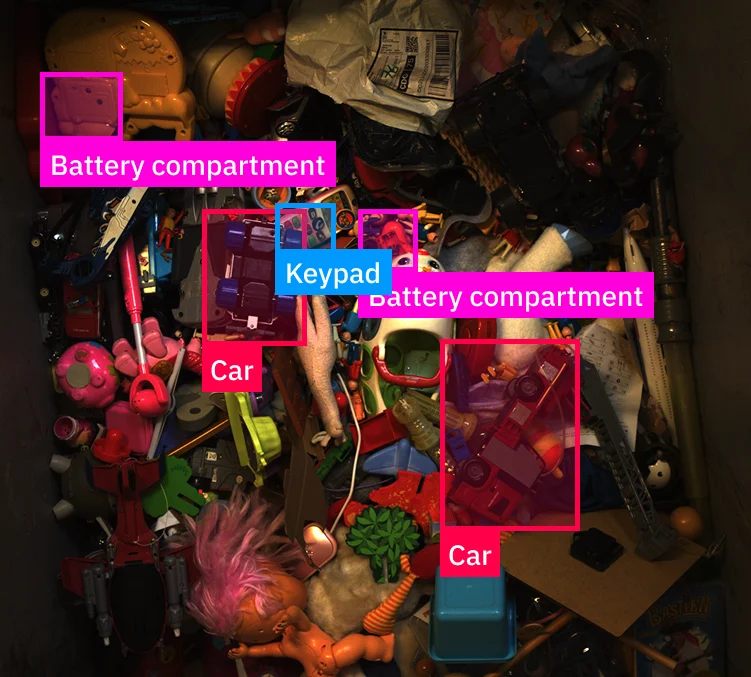
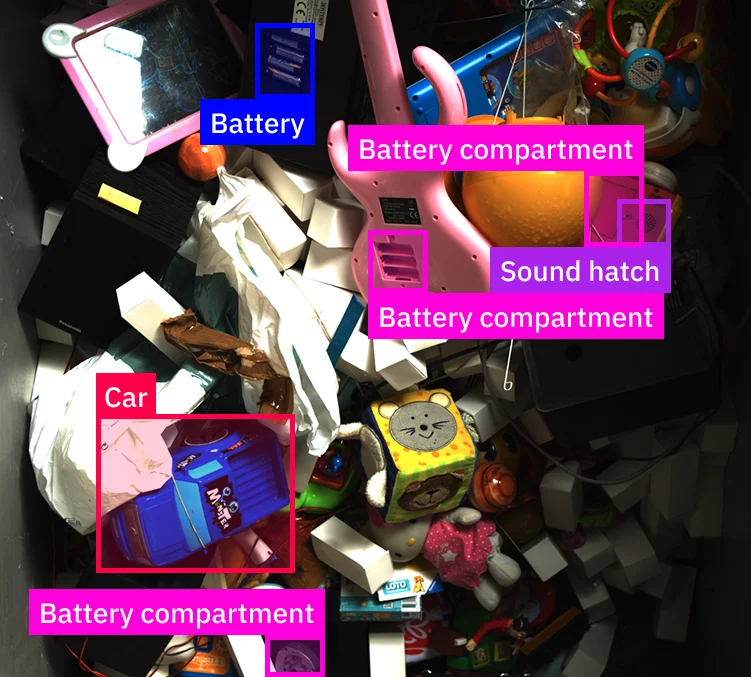
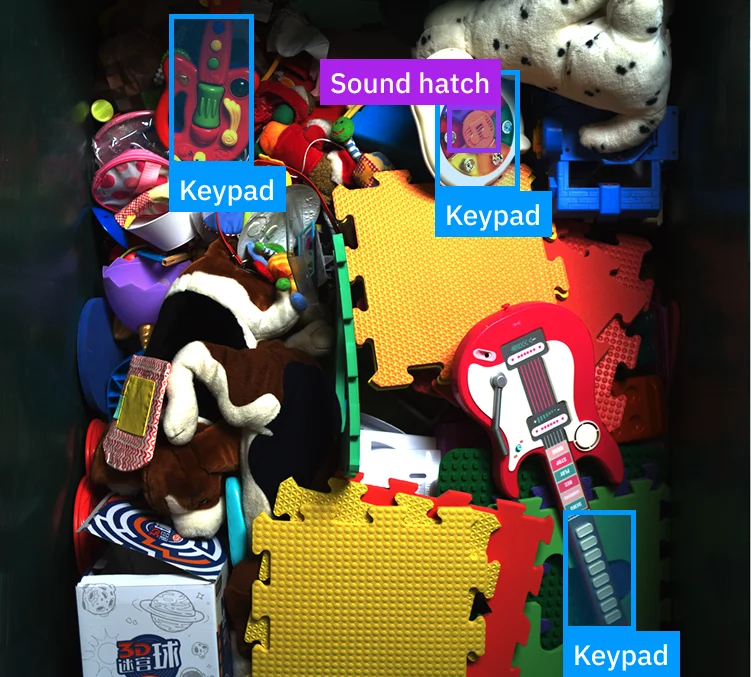
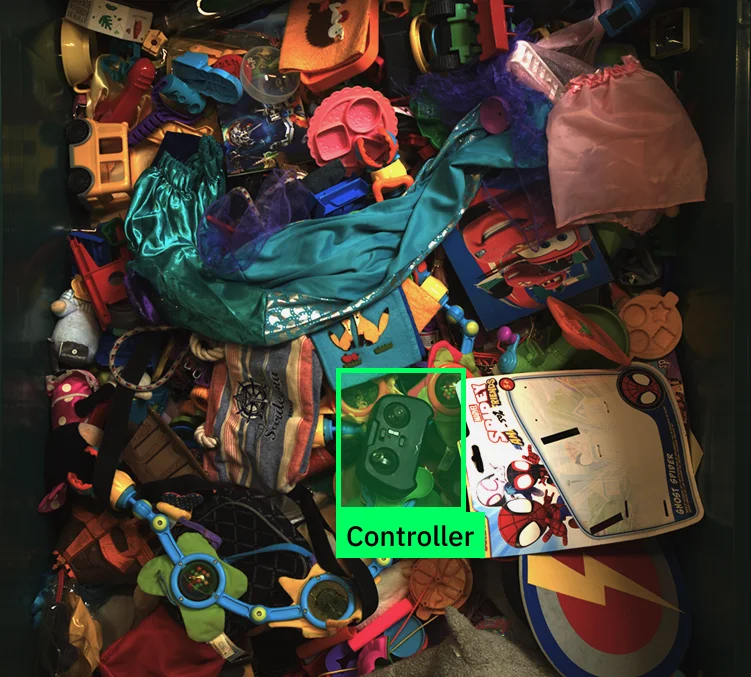
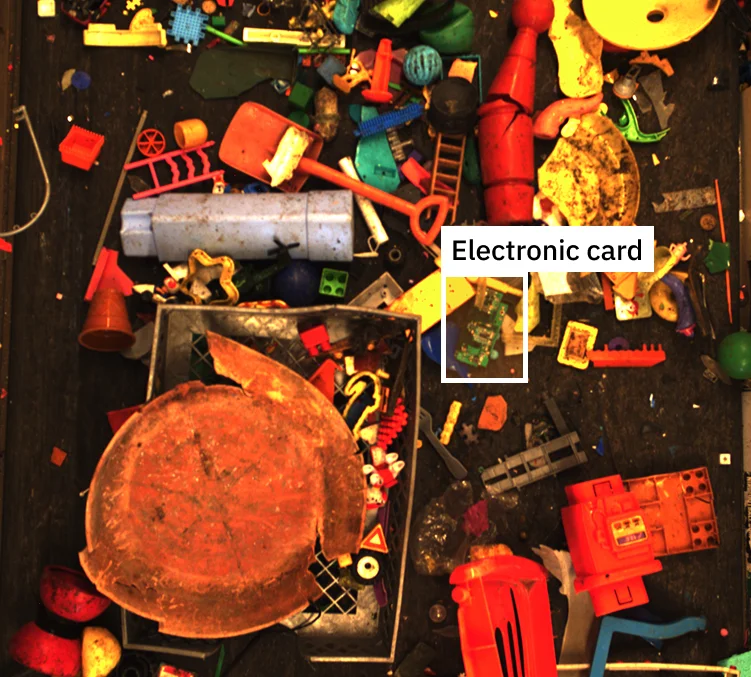
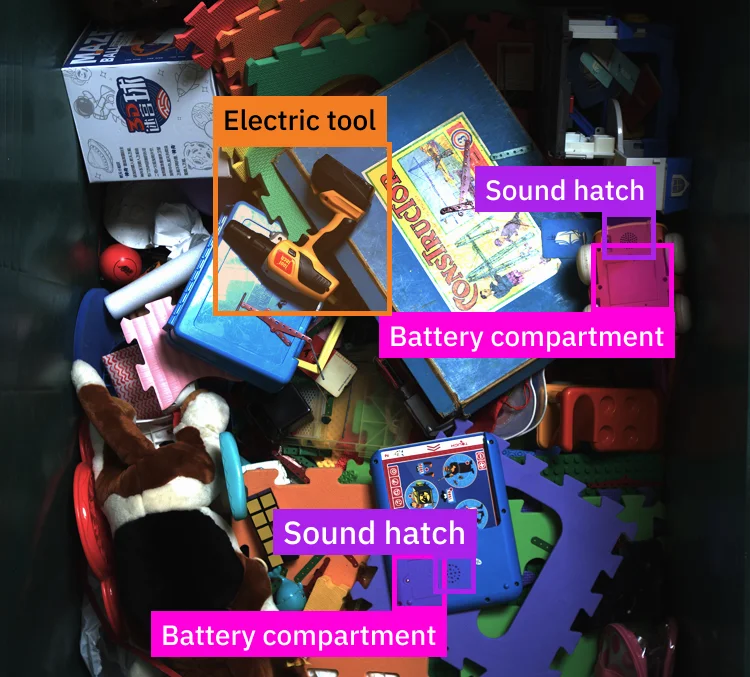
The flow is simple: a toy travels along the conveyor, passes under the camera, the AI analyses it, a WEEE feature is detected, the operator is alerted and the line can stop, and the toy is removed by hand.
This approach has a deliberate consequence: if no feature is visible (a toy face-down, hidden under others), it will not be detected. The system can often fall back on another clue, such as a visible screen or keypad when the battery compartment is not, but it makes no claim to be exhaustive.
The results: strong detection across all feature classes
In the latest validation phase, the AI model delivered strong results across all six feature classes — with two reaching 100% on the restricted test set and none falling below 75%.
| Feature | Detection accuracy | Training examples |
|---|---|---|
| Sound hatch | 100% | 150 |
| Open battery compartment | 100% | 170 |
| Closed battery compartment | 99% | 125 |
| Keypad | 87.5% | 197 |
| Remote-controlled car | 80% | 353 |
| Power tool | 75% | 102 |
This may seem counterintuitive — the 80% performance on this class reflects the fact that remote-controlled cars are very common in the stream, and that the model has difficulty distinguishing electric from non-electric ones.
During this restricted test, two of the six classes reached 100% detection accuracy. Every class exceeded 75%, with an overall average above 88%. These results confirm the model's ability to reliably identify WEEE markers across a diverse and challenging stream of mixed toys.
On false alerts, the result is just as encouraging. On a batch of 32 fully compliant crates, the system raised only three false detections, the equivalent of three unnecessary trips per day for an operator over an eight-hour shift. That is low enough for real-world operation, without pushback from field teams.
Taken together, the trials point to a detection potential well above 80% on the WEEE features the system has learned. It will never reach 100%: a toy lying face-down, with its battery compartment or sound hatch hidden from the camera, or a soft toy with embedded electronics, may show no usable clue at all. But as an added safety net after manual sorting, catching the large majority of what slips through already means a clear reduction in fire risk.
The positioning: a quality barrier, not a magic bullet
Visionairy does not sell perfect detection. The solution is designed as an affordable, additional quality barrier, placed after the manual sorting station. Where the operator remains the first filter, the AI secures whatever may have slipped through at high throughput.
When a WEEE item is detected, the system triggers an alert or stops the line so that an operator can remove the toy. For an investment of under €30,000, a sorting centre gains a device capable of significantly reducing fire risk, without disrupting its organisation.
What Tripapyrus says
« Quand Ecomaison nous a proposé de tester la solution Visionairy et de participer à la mise au point de cet outil de caméra, on a tout de suite signé parce qu'on croit à l'IA. » "When Ecomaison offered us the chance to test the Visionairy solution and take part in developing this camera tool, we signed right away because we believe in AI."
Frank Elaudais, Site Manager, Tripapyrus
Towards an industrial solution
The next challenges: refine the model with real data from additional lines to capture more diversity, connect the system to the line for robust alerting, train operators, and involve the teams in the loop of validating and removing detected WEEE.
Visionairy continues to improve its AI as new data is collected. The performance trajectory observed on the best-supplied classes shows the potential still ahead.