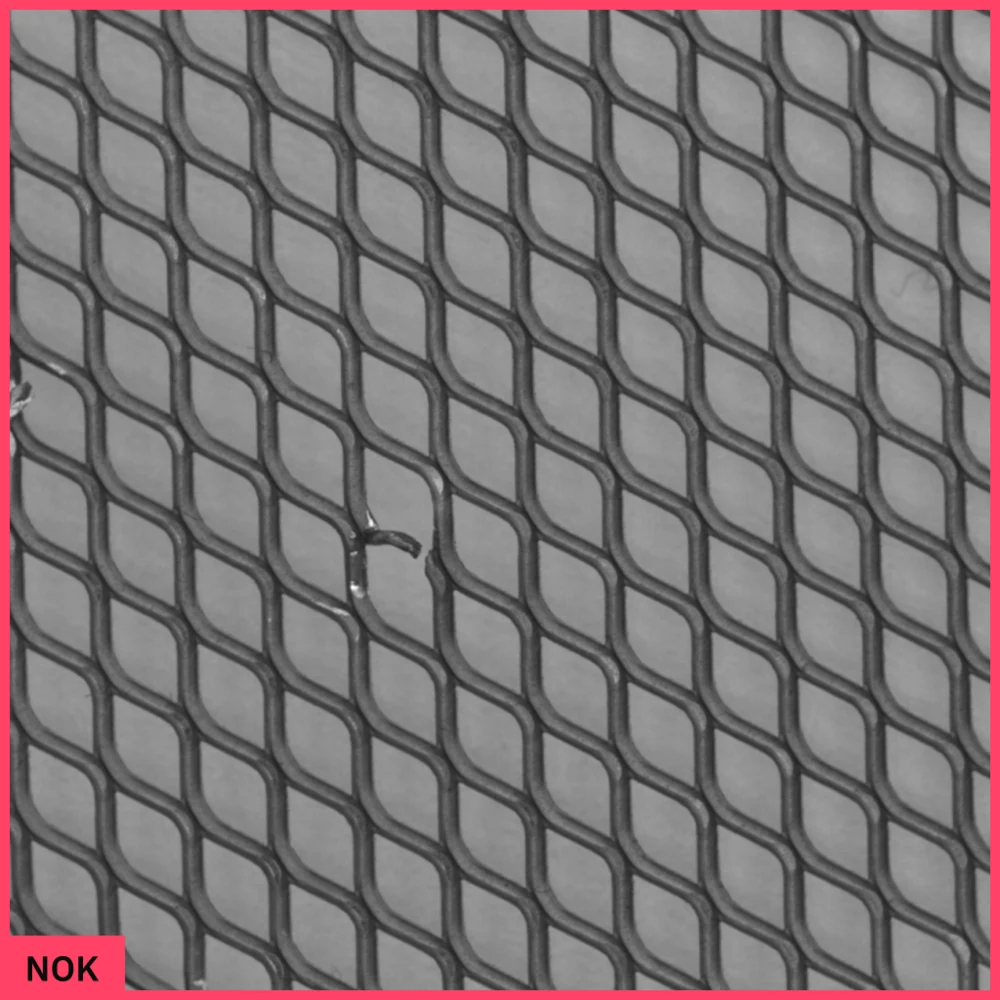
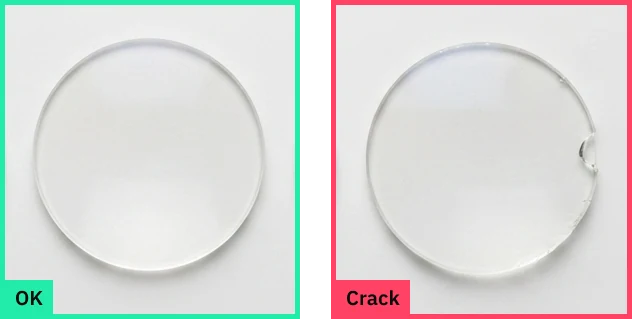
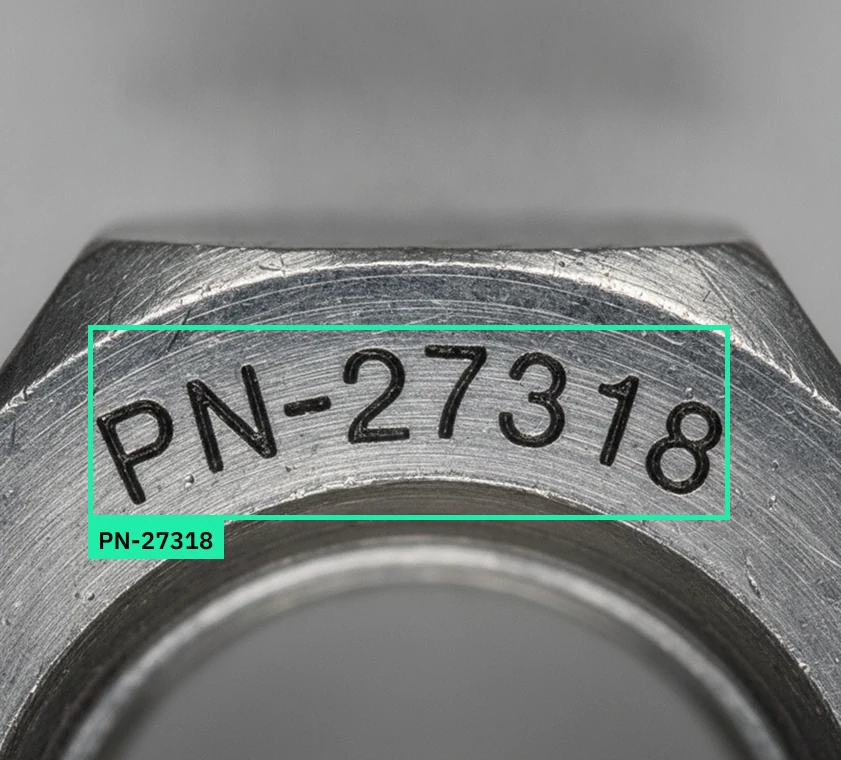
Your camera answers three questions at once: is this object present? How many are there? Where exactly? Automatically, at full line speed.

Object detection doesn't look for defects — it looks for objects. The AI learns what specific items look like, then scans every image to answer three questions: is this object present or absent, how many are there, and where exactly is each one located? Unlike anomaly detection, you define the objects you care about. The model learns their shape, size, and appearance from your own production images, then runs at full line speed without sampling.
When presence or absence of a specific component must be verified before the product moves to the next step — no manual visual check, no sampling.
When something that shouldn't be there — a contaminant, a wrong material, an unexpected item — needs to be caught before it exits the line.
When each item passing in front of the camera needs to be identified, counted by type, and logged — automatically, without stopping the line.
When a single frame contains several distinct items that each need to be detected and located independently, in one pass.
Detect batteries, phones, and circuit boards mixed into toy sorting streams. Presence detection triggers ejection before prohibited items exit the line.
Identify and count contaminants by type in a recycled plastic stream in real time. Each contaminant class is detected and logged separately as material flows past the camera.
Verify that every required component is present before the part moves to the next station — fasteners, clips, connectors, labels, any defined object.
Check that all items are present in a kit or bundle before sealing. Detect missing accessories, wrong inserts, or incomplete sets.
Detect and classify multiple distinct product references on the same line. Each reference triggers its own set of rules with no manual changeover.
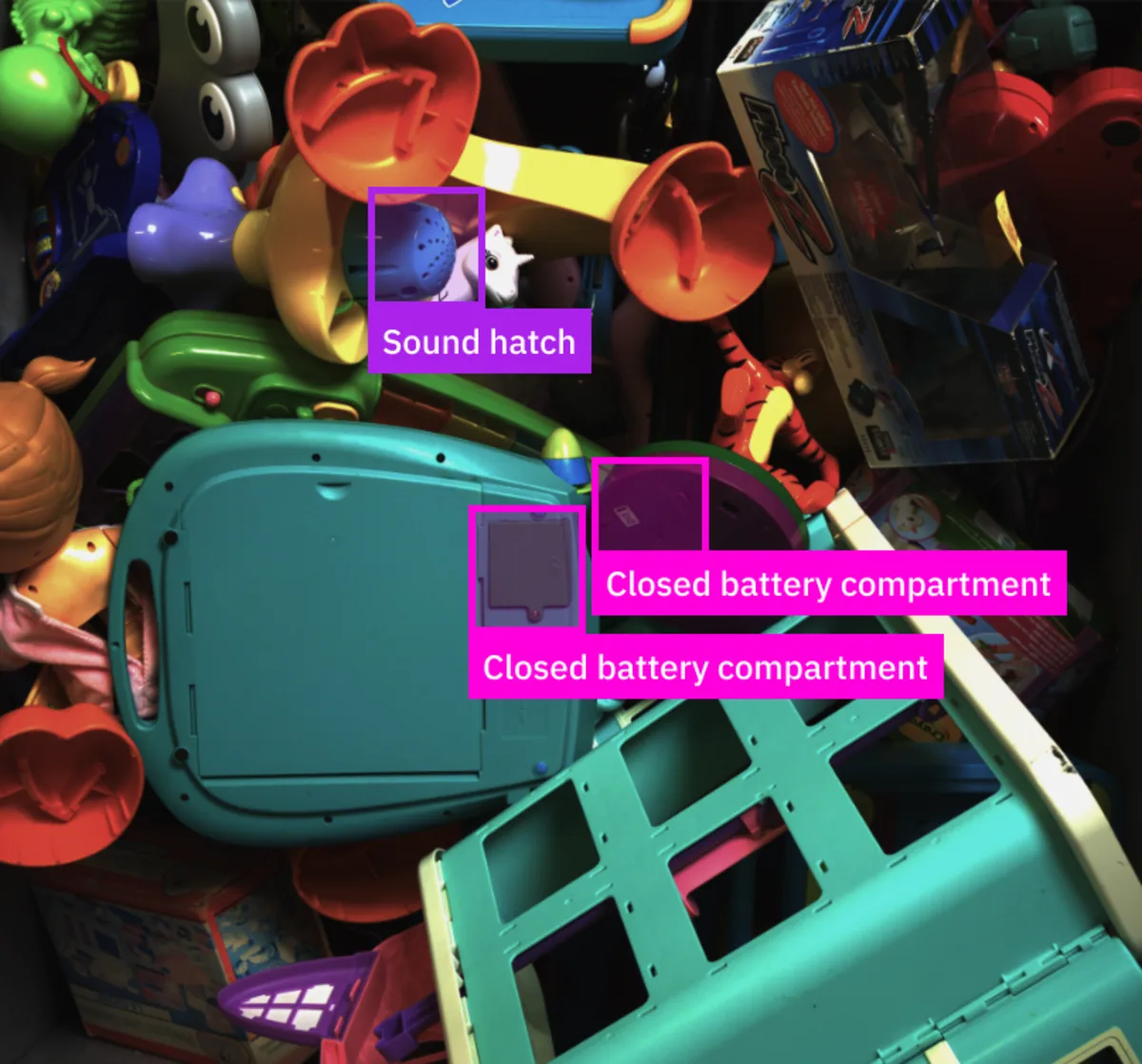
Presence, count, and location are returned together from a single image. No need to chain separate inspection steps for each question.
100% of what passes in front of the camera is inspected, at full conveyor speed. No sampling, no gaps between shifts.
The model learns from your own production images. No generic library — it knows exactly what your specific items look like, in your specific conditions.
Each inspection result is stored with its source image. Full audit trail for quality reporting, process analysis, and customer documentation.
Our vision engineers analyze your production case and deliver a tailored feasibility report at no cost, in under five days.