
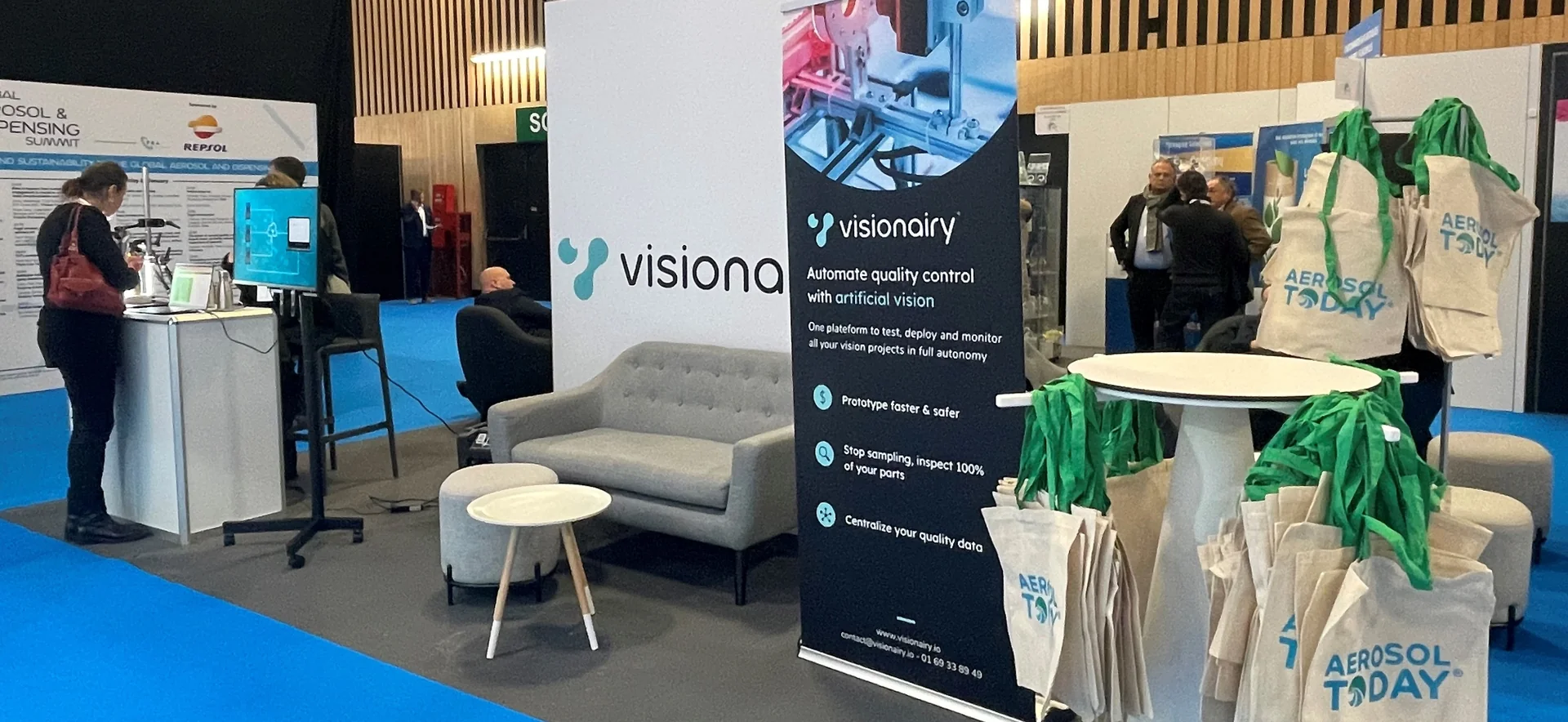
Visionairy, which secured the 2024 FEA Aerosol Startup Award, developed software powered by patented AI compatible with standard camera systems. Co-founder Daniel Blengino explained how this innovation automates visual quality inspection in the factory.
Company background
Founded in 2018 and based near Paris, Visionairy emerged after its founders observed how much quality control was still done manually in French factories, and how existing market solutions underperformed. The aerosol sector has matured in its adoption of computer vision, yet traditional smart cameras still present real limitations: dependency on experts, extensive programming, and suboptimal results.
The core problem
Blengino identified a major challenge: a high false positive rate that leads to unnecessary scrap. Aerosol production inherently involves variability. Traditional vision systems rely on pre-defined rules, so comprehensive defect coverage becomes increasingly difficult as variability grows, which results in poor performance.
The solution: GLAD software
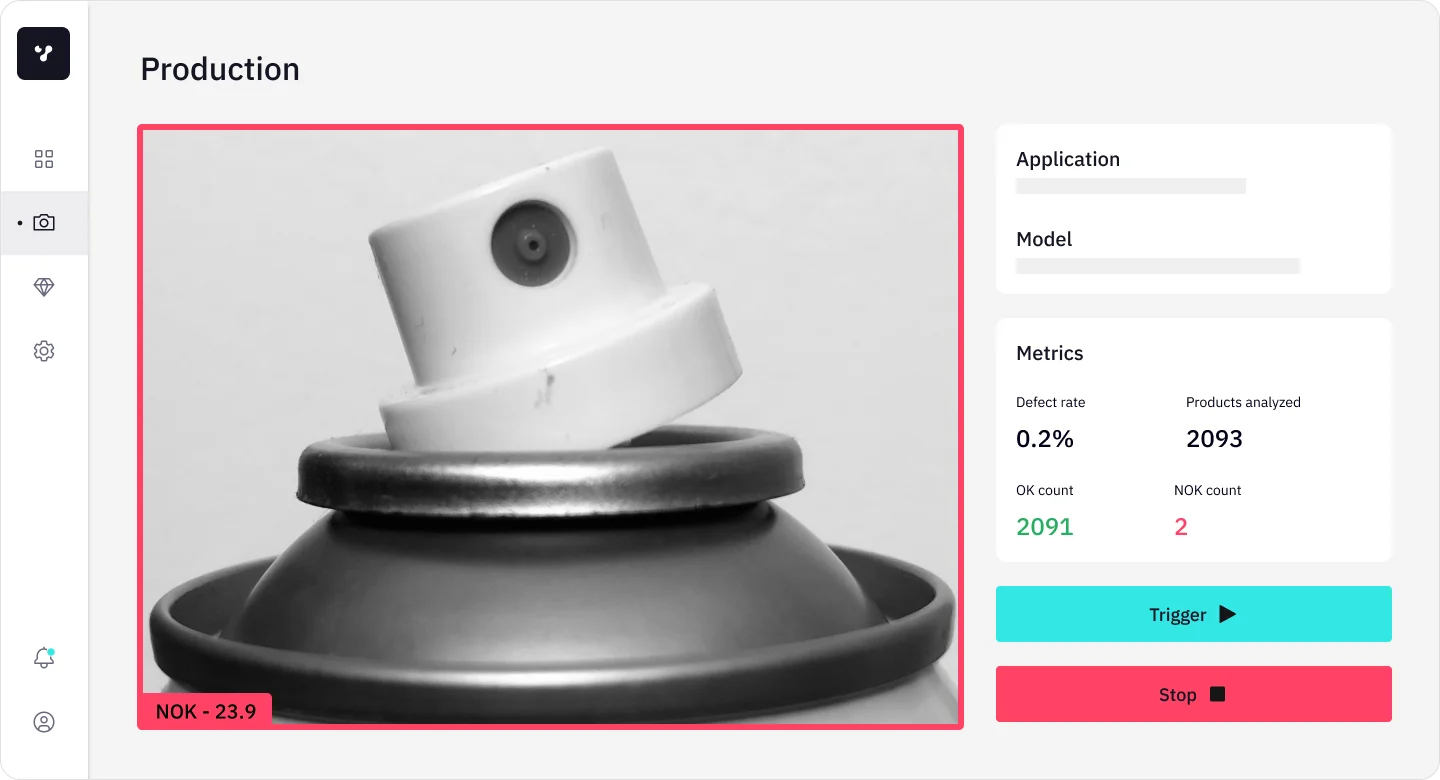
Visionairy's no-code platform lets teams create, test, and deploy AI-based vision applications for defect detection and part sorting. Its patented GLAD technology differs fundamentally: it trains itself using only OK images, instead of learning from a defect database. This approach enables autonomous, traceable digitization aligned with Industry 4.0 strategies. Beyond image analysis, the system centralizes production data for real-time access and continuous performance improvement.
Three essential elements
Blengino emphasized three requirements for a successful computer vision solution: good technology, effective tools, and quality images. He stressed that regardless of analytical capabilities, if the information to detect is not in the image, the system will not be able to detect anything. As an optical engineer, he noted that the reflective aluminum composition of aerosols complicates image capture. Visionairy therefore provides optical expertise on cameras, lighting, and configurations.
The platform recommends cost-effective standard hardware (cameras, lighting, PLCs) and retrofits existing production lines, since the software works with any camera system.
Implementation process
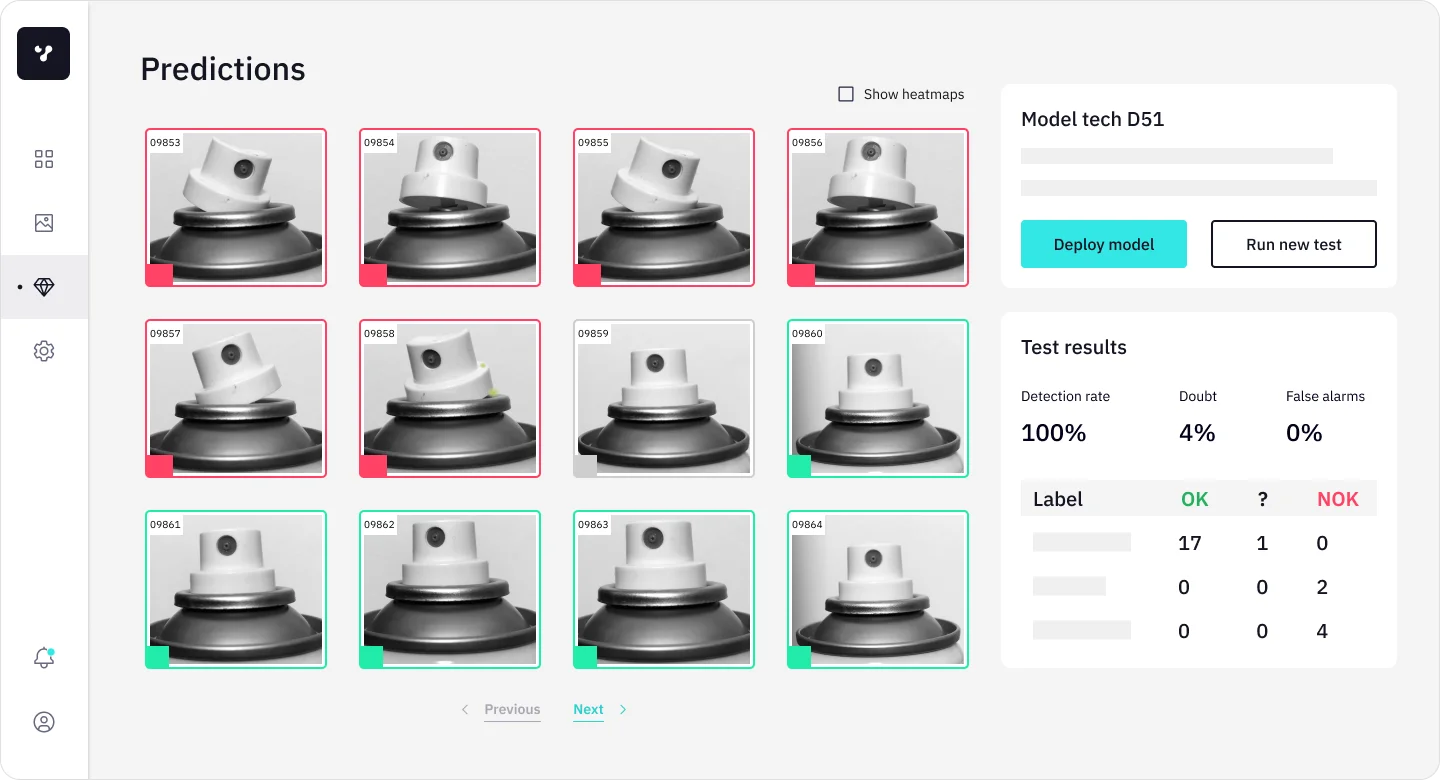
GLAD requires only 50 to 100 OK images to create a deployable production model. This minimal data requirement benefits factories where defects are uncommon: GLAD enables automated inspection using accessible images while rapidly detecting anomalies and novel defects.
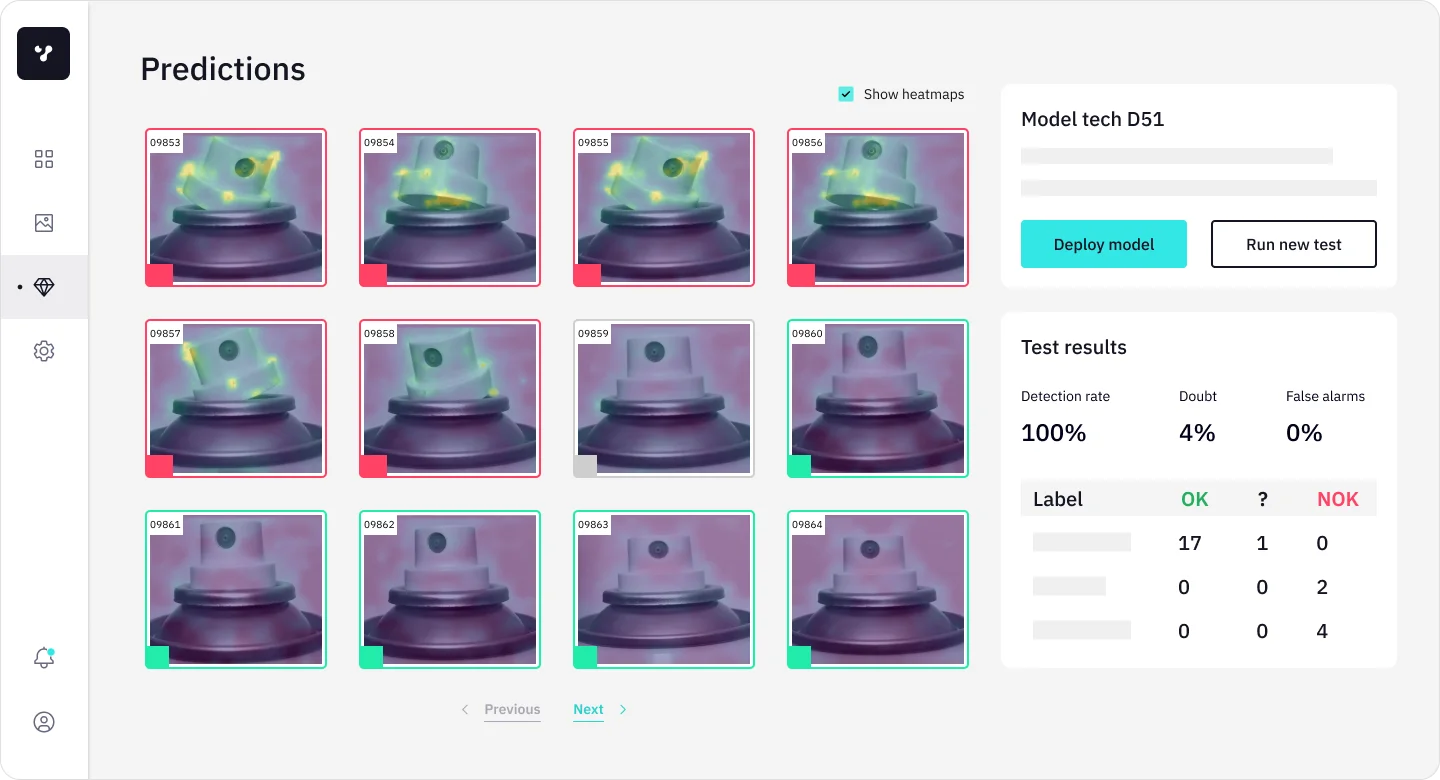
Following evaluation, Visionairy transmits an OK or not-OK status to the PLC. Factories can reject products, halt the line, or trigger alarms, with fully customizable responses developed alongside automation teams or partner integrators. With five years of field experience, Visionairy is developing integrated optical assistance tools that give customers autonomy in configuration design.
Award recognition
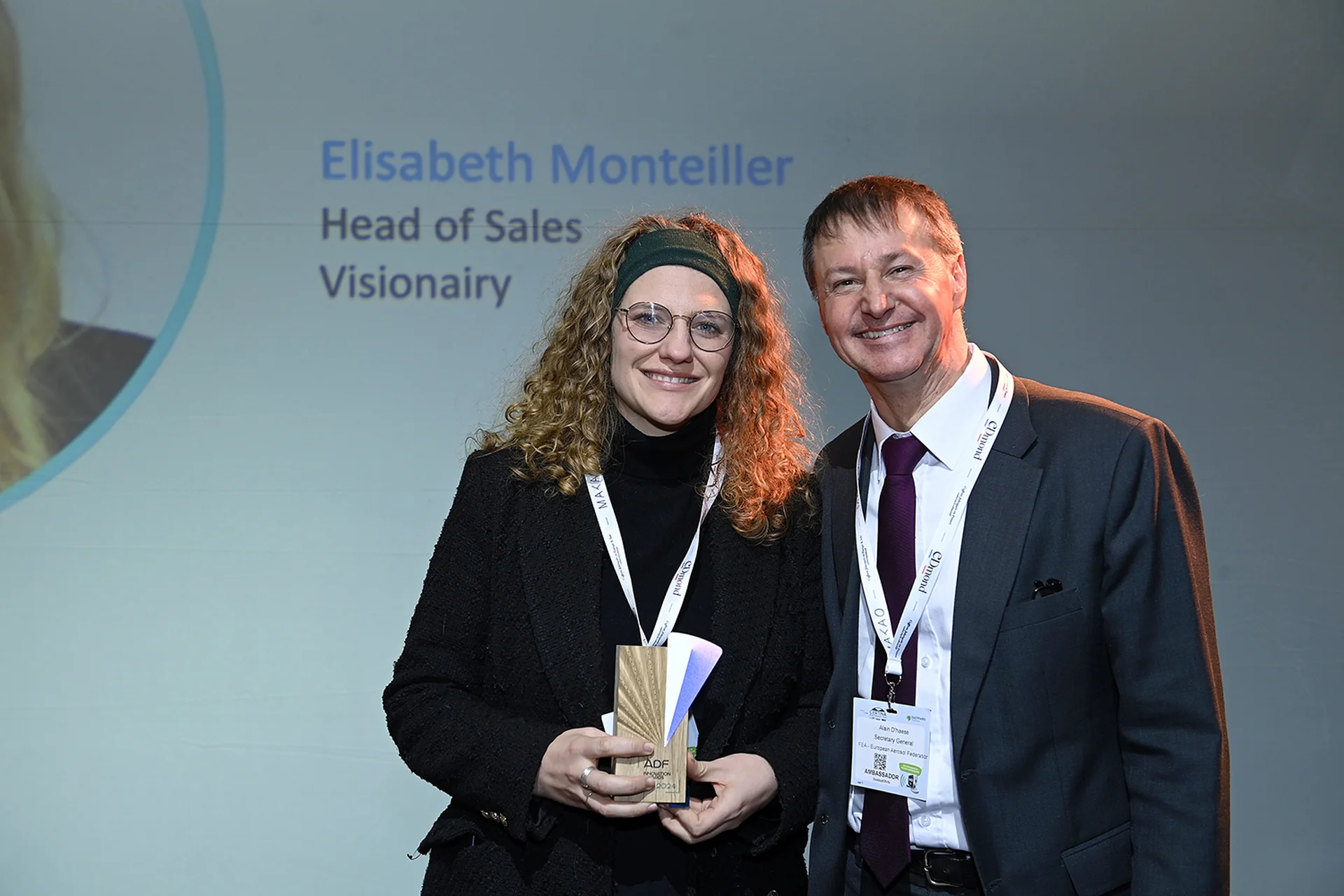
At ADF 2024, part of Paris Packaging Week, the FEA selected Visionairy as Startup Award winner. Blengino attributed this success to addressing critical industry quality issues while advancing performance boundaries within an already-mature computer vision sector. He highlighted the team's ability to test, integrate, and launch the solution into production with an initial industrial buffer in less than six months. The jury also appreciated the focus on solving production problems rather than design challenges.
Broader applications
GLAD extends beyond aerosols into electronics, automotive, and cosmetics, supporting cosmetic control, assembly inspection, and part sorting across metal and packaging materials. Visionairy is especially well suited to the aerosol industry, where cameras are already installed and retrofitting is straightforward. The sector has experienced the limitations of traditional computer vision, and Visionairy's technology moves past those boundaries.
What comes next
For the rest of the year, Visionairy committed to expanding its customer base across the aerosol and packaging markets, including an exhibition at Hannover Messe, where the team occupied a startup booth.